Saj
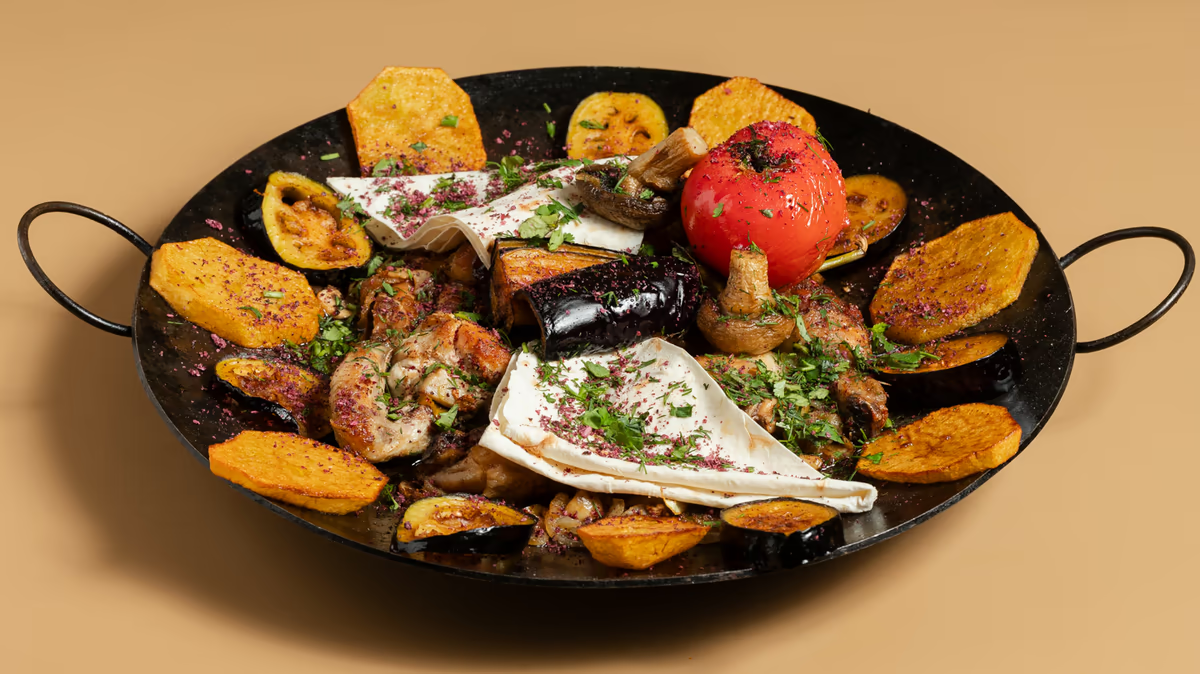
Saj is meat and vegetables cooked together on a large convex griddle (also called a saj), then served on the same pan. It is a communal, sharing dish popular in Baku and across Azerbaijan.
What is Saj?
Saj (or sac) refers both to the dish and to the pan it is cooked in: a large, convex metal griddle over a fire or gas. Meat (lamb or chicken) and vegetables potatoes, tomatoes, peppers, onion are cooked together on this surface, often with butter or oil, until tender and slightly charred. The food is usually brought to the table on the same saj pan, so everyone helps themselves from the centre. It is a social, sharing meal.
How do you eat Saj?
Saj is served on the pan it was cooked in, often placed in the middle of the table. Everyone takes meat and vegetables onto their plate with a spoon or tongs. Eat with flatbread (lavash or tendir), or with a fork. The mix of meat, potatoes, tomatoes, and peppers is hearty; bread is used to mop up the juices. It is informal and shared.
What meats and vegetables are in a Saj dish?
Meat is usually lamb (diced) or chicken (pieces). Vegetables typically include potatoes (wedges or chunks), tomatoes, bell peppers, and onion. Everything is cooked together on the saj; the potatoes soak up the meat and tomato juices. Some versions add aubergine or carrot. Butter or oil, salt, pepper, and spices (e.g. cumin, paprika) season the dish.
From Baking Bread to Sizzling Meat: The Nomadic Origins
The Saj pan has fascinating nomadic roots. Originally, this convex metal shield was used by shepherds and nomads over open campfires. When placed upside down (like a dome), the hot metal surface was used to quickly bake flatbreads like lavash or qutabs. Once the bread was done, they would flip the pan over like a bowl, using the hollow center to fry freshly chopped meat and vegetables in animal fat. Today, this dual-purpose tool is the centerpiece of Azerbaijani barbecue culture.
The Sizzling Table Presentation and the "Hidden" Bread
When you order Saj in a restaurant in Baku, it is a theatrical experience. The heavy iron pan is brought to your table resting on a special wrought-iron stand. Inside the stand, hot coals or a small flame keep the dish sizzling and bubbling throughout your entire meal. But the absolute best part is often hidden at the bottom: chefs usually place pieces of thin lavash bread right in the center of the pan under the meat. By the time you eat it, this bread has soaked up all the spiced lamb fat, tomato juices, and savory flavors.
Ingredients
- Lamb or chicken (diced)
- Potatoes
- Tomatoes
- Bell peppers
- Onion
- Butter or oil
- Salt
- Pepper
- Spices
Frequently asked questions
- Can a Saj dish be shared among several people?
- Yes. Saj is meant to be shared. The pan is brought to the table and everyone serves themselves typically for two to six people, depending on the size of the pan and the portion. Ordering one saj for the table is standard in restaurants.
- What kind of pan is used to cook Saj?
- A saj (sac) is a large, convex metal pan like an upside-down dome or a shallow wok. It is traditionally made of cast iron or similar, and used over an open fire or a gas burner. The curved surface spreads the heat and lets the juices run to the centre. In restaurants, big professional saj pans are used; at home, a large frying pan or wok can be used instead.
- Can I order a seafood version of Saj?
- Yes! While lamb and chicken are the most common, high-end restaurants in Baku and coastal areas offer Baliq Saci (Fish Saj). It is usually made with premium Caspian sturgeon or salmon, cooked with potatoes, tomatoes, and a splash of pomegranate juice (Narsharab).
- Do I need to order side dishes with Saj?
- Not necessarily. Saj is a complete "one-pan" meal. Because it is packed with heavy meat, roasted potatoes, and vegetables, you only really need some fresh bread, a light herb plate, and perhaps a yogurt drink like Ayran to balance the heavy fats.