Piti
Piti is not just a soup; it is a culinary ritual and the proud gastronomic signature of Sheki. It is a robust lamb stew with chickpeas, chestnuts, and lamb tail fat, assembled raw in individual unglazed clay pots (dopu) and simmered for 8 to 12 hours.
What is Piti?
Piti is not just a soup; it is a culinary ritual and the proud gastronomic signature of Sheki, an ancient city in the foothills of the Caucasus Mountains. It is a robust, intensely flavorful stew made from bone-in lamb, whole chickpeas, baked chestnuts, and a lump of pure lamb tail fat. What makes Piti entirely unique is its cooking method: it is assembled raw in small, individual unglazed clay pots (called "dopu"). These pots are then placed in a traditional oven or on a slow stove to simmer gently for a staggering 8 to 12 hours. During this marathon cooking process, the broth turns golden with saffron, the meat becomes so tender it melts upon touch, and the fat seals the flavors inside the clay.
How do you eat Piti?
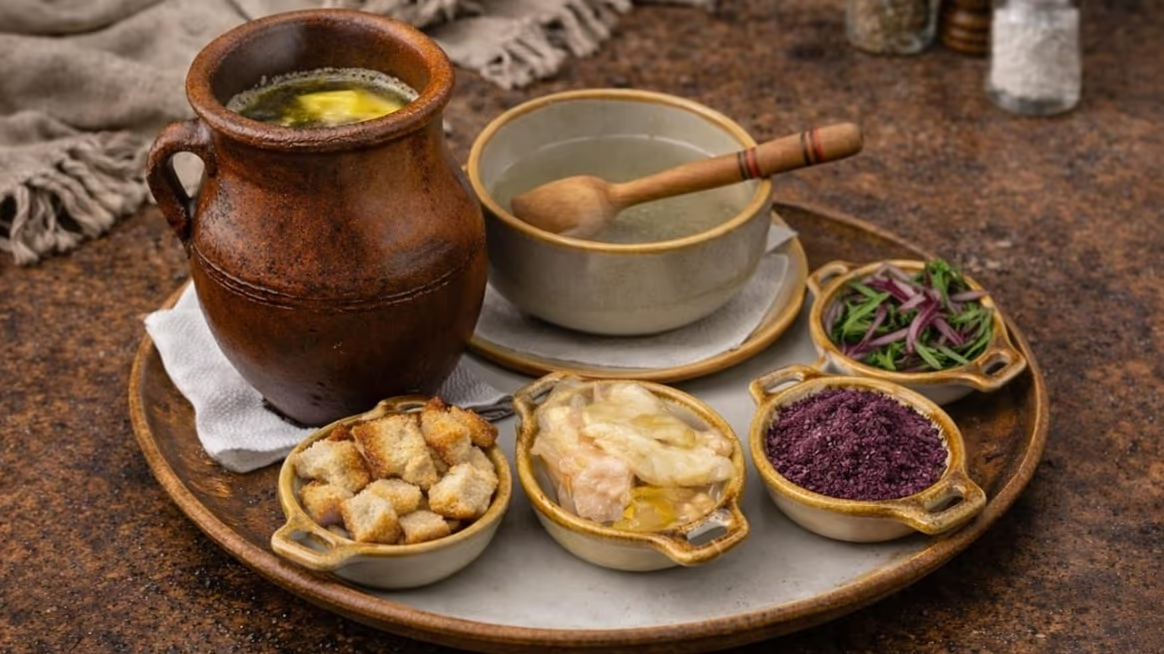
Eating Piti is a strict two-course ceremony that every local will happily teach you. When the steaming clay pot arrives at your table, you are given a bowl and a plate of dry, day-old bread. Step One: You tear the dry bread into the bowl, and carefully pour only the golden liquid broth from the clay pot over the bread. You eat this rich, soaked bread as your soup course. Step Two: You take the remaining solid ingredients inside the clay pot (the lamb, chickpeas, chestnuts, and fat), add a sprinkle of sumac for tartness, and use a wooden pestle or a fork to aggressively mash everything together into a thick, meaty paste. You then eat this rich paste as your main course, usually paired with raw red onions to cut through the heavy fat.
What goes into a traditional Piti pot?
A true Sheki Piti has a very specific architecture. At the bottom of the clay pot goes a handful of chickpeas (soaked overnight). Next comes a large chunk of bone-in lamb (usually the shank or shoulder). On top of the meat goes a whole, peeled local chestnut and perhaps a small piece of dried sour plum (alcha) to balance the fat. The crowning glory is a thick slab of "quyruq" (lamb tail fat) placed at the very top, which melts downward during the 12-hour cook, basting the meat. A pinch of saffron infused in water is added for color and aroma before the pot is sealed and sent to the oven.
Ingredients
- Bone-in lamb chunks
- Lamb tail fat (quyruq)
- Chickpeas (soaked)
- Whole peeled chestnuts
- Saffron water
- Dried sour plum (alcha)
- Salt and black pepper
- Sumac and red onions (for serving)
Frequently asked questions
- Why is Piti served in clay pots?
- The unglazed clay pot ("dopu") is the soul of the dish. The porous clay absorbs the flavors of the lamb and fat over years of use, imparting a unique earthy taste to the stew that a metal pot simply cannot replicate. Furthermore, the thick clay acts as a perfect insulator, allowing the tough cuts of meat and dense chickpeas to simmer at a very low, consistent temperature for hours without boiling over or burning.
- Do you eat Piti as a soup or a main course?
- It is ingeniously designed to be both! Because of the traditional two-step eating ritual, one small clay pot provides a full, heavy meal. You get a hearty, bread-thickened soup for your starter, and a rich, mashed meat-and-chickpea pate for your main course. It is an incredibly filling dish, historically designed to give workers enough energy for an entire day of hard labor.