Badambura
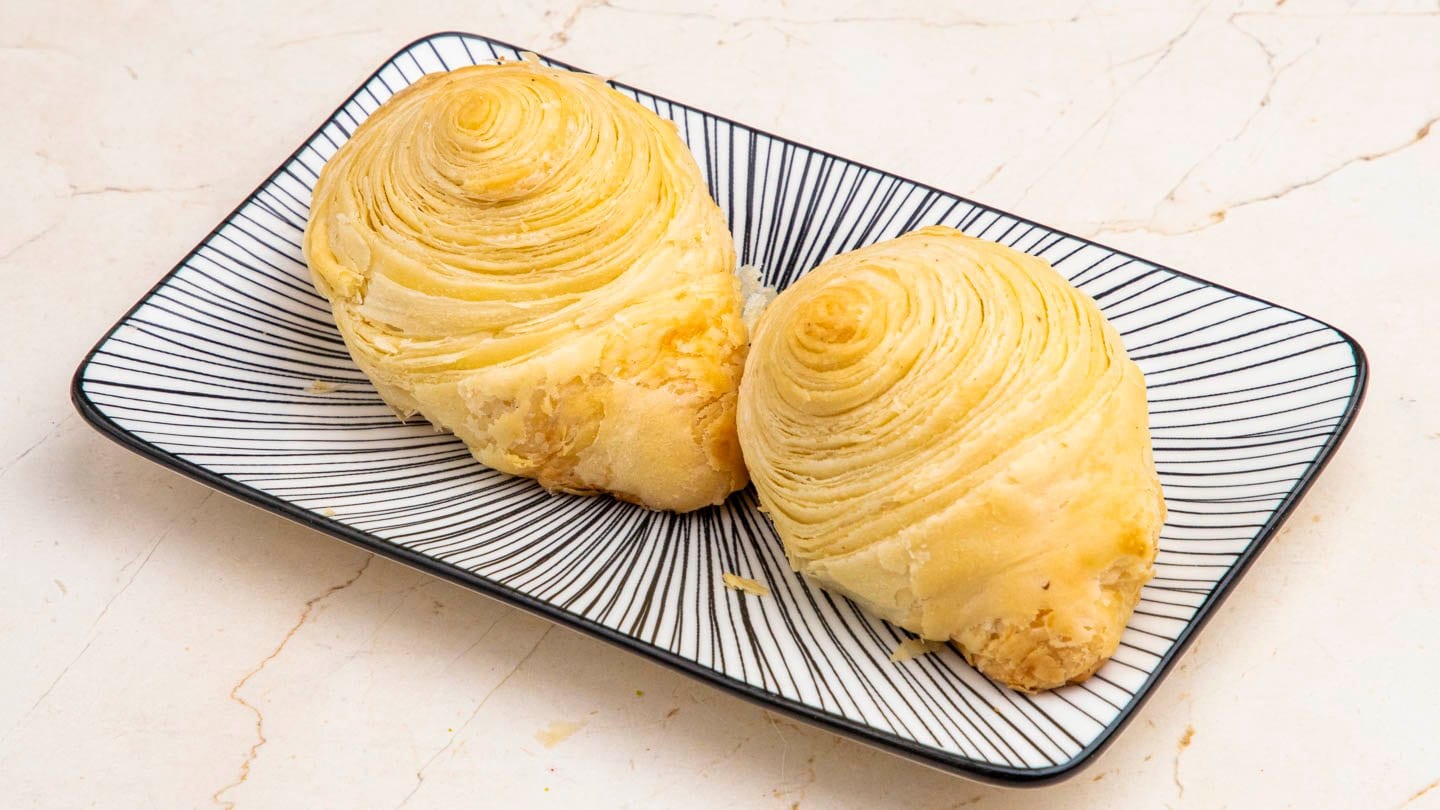
Badambura is a small, oval or half-moon pastry filled with ground almonds and sugar, often flavoured with cardamom. It is a Novruz sweet and a cousin to shekerbura.
What is Badambura?
Badambura is a traditional Azerbaijani pastry: a buttery dough wrapped around a filling of ground almonds, sugar, and cardamom, shaped into a small oval or half-moon, and baked until golden. The name comes from "badam" (almond). It is one of the sweets of the Novruz table and is also sold year-round in Baku. It is similar to shekerbura but typically almond-only and often slightly smaller or differently shaped.
How do you eat Badambura?
Badambura is eaten with tea one or two per person. It is sweet and nutty; strong black tea balances the richness. Serve at room temperature, on a plate with other sweets or on its own. Eat with your hands or a fork.
What is the difference between Badambura and Shekerbura?
Both are nut-filled pastries for Novruz. Badambura is filled with almonds (badam) only; shekerbura is often filled with walnuts or a mix of almonds and walnuts. Badambura is often oval or smaller; shekerbura is a half-moon with a pinched pattern (maggash). The dough and method are similar; the nut and shape differ.
The Hypnotic Seashell Technique
What makes Badambura visually stunning is its multi-layered, spiral crust that looks like a delicate seashell or spun thread. To achieve this, cooks brush multiple large sheets of dough with melted butter, stack them, and roll them tightly into a massive cylinder. This cylinder is then cut into thick slices. When you take one slice and flatten it out to stuff it with almonds, those concentric circles of butter and dough create the famous flaky, spiral top.
The Elegance of Almonds
In the hierarchy of Azerbaijani nuts, almonds (badam) are considered the most delicate and elegant. While walnuts in Pakhlava provide a robust, earthy flavor, the blanched, peeled almonds in Badambura offer a much softer, milky sweetness that pairs flawlessly with the heavy dose of ground cardamom.
Ingredients
- Flour
- Butter
- Ground almonds
- Sugar
- Cardamom
- Egg (for glaze)
Frequently asked questions
- Does Badambura have a flaky crust?
- Yes. The dough is made with butter and is layered or rolled so that it bakes into a flaky, tender crust similar to shekerbura. It is not as thin as phyllo; it is a short, buttery pastry that breaks nicely when you bite.
- Is there honey in Badambura?
- Usually no. The filling is ground almonds, sugar, and cardamom no honey inside. After baking, some recipes brush the surface with a little sugar syrup, but honey is not a standard ingredient. The sweetness comes from sugar in the filling.
- Why is there no egg wash on Badambura?
- Just like Shekerbura, Badambura must remain pale and elegant. Applying an egg wash would glue the delicate, buttery layers together and turn the pastry dark brown in the oven. The goal is to let the flaky, spiral layers separate naturally in the heat, creating a texture that shatters instantly when you bite into it.